Digital marketingBy Mariano González Campas · 10 min read
Email marketing: the "dead" channel that still outsells your social media
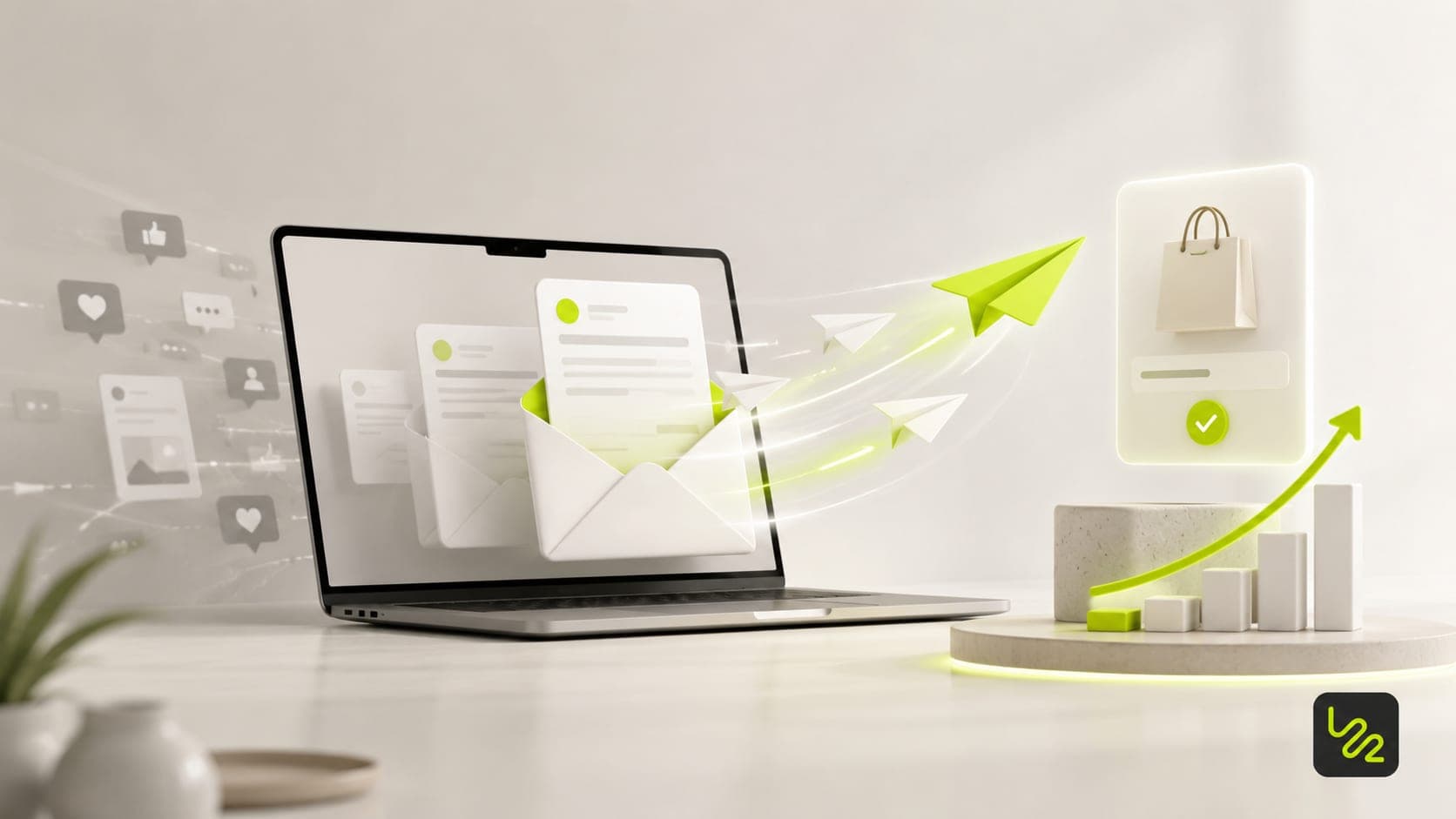
Email marketing is, by ROI, the best channel in digital marketing: industry studies consistently put it above USD 30 back for every dollar spent. People have been calling it dead for fifteen years, and every year it keeps beating social media, paid ads, and almost everything else — while organic reach on Instagram and Facebook keeps sinking.
This guide is for small businesses without a dedicated marketing team: why email still works, how to build your subscriber list from zero without buying lists, which automated sequences to set up first, and the mistakes that send your campaigns straight to spam. No hype, just numbers.
Key takeaways
- Email marketing is the highest-ROI channel in digital marketing: industry studies estimate more than USD 30 back for every dollar spent.
- Your email list is an asset you own: unlike social media followers, nobody can take it away or charge you to reach it.
- Buying databases never pays off: it's illegal in most countries, it torches your domain reputation, and it tanks deliverability.
- The four basic automated sequences — welcome, abandoned cart, post-purchase, and win-back — get set up once and then run themselves.
- A well-built abandoned cart sequence recovers between 5% and 15% of sales you'd already written off.
- For a small business, a biweekly or monthly newsletter sustained for a year outperforms three months of intensity followed by silence.
Why does email marketing still work in 2026?
Email marketing means using email to build commercial relationships with customers and prospects: newsletters, automated sequences, and one-off sales campaigns. It works because email is the only mass digital channel where the message arrives in full, with no algorithm standing in the middle, to an audience that explicitly opted in to receive it.
Compare that to everything else: on social media you pay — in cash or in lost reach — to reach your own audience; on Google you compete for every click. With email, sending a thousand messages costs pennies, and the inbox is still where people handle purchases, invoices, and work every single day. The ROI hasn't dropped — the hype did, not the effectiveness.
Your list is yours; your followers aren't
Here's the core difference: your Instagram followers are Meta's users. If the algorithm changes, your reach collapses overnight; if the account gets suspended, they're gone. Your email list, on the other hand, is an asset you actually own: nobody charges you to reach your own audience, and nobody else decides who sees your message. Social media rents you an audience; email owns one.
It happens every week: a brand with tens of thousands of followers posts something and a few hundred people see it. That same business, with a well-maintained list of two thousand contacts, reaches all two thousand every time it hits send. Once you get that, the rest of your marketing shifts purpose: social media and paid ads exist, among other things, to feed the list.
How do you build a subscriber list from scratch?
The rule is simple: nobody hands over their email for nothing. You need a clear trade — a concrete incentive in exchange for the contact — and visible capture points everywhere your business touches people.
- Offer something in return: a useful guide, a checklist, a welcome discount. "Subscribe to our newsletter" motivates nobody; "10% off your first purchase" does.
- Put a visible form on your site: in the footer, on the blog, and — used carefully — an exit-intent popup. Ask for the email only; every extra field drops your sign-up rate.
- Capture on every sale and every inquiry: every customer who buys or messages you on WhatsApp should end up on the list, always with their consent.
- Add the physical world if you have one: a QR code on the counter or on packaging, with the incentive front and center, turns walk-in buyers into permanent contacts.
- Never buy databases: it's illegal in most countries, your emails land in spam, and you torch your domain's reputation. A thousand of your own contacts are worth more than a hundred thousand purchased ones.
The 4 automated sequences that run themselves
An automated sequence is a series of emails that fires on its own when someone does something: subscribes, abandons a cart, makes a purchase. You set it up once and it runs every day of the year. These four cover 90% of what a small business needs.
1. Welcome
The most-opened email you'll ever send is the first one. Introduce yourself, deliver on the promise — the discount, the guide — and tell the subscriber what to expect from you. Two or three emails in the first week set the tone for the relationship: who you are, what you sell, and why it's worth buying from you.
2. Abandoned cart
If you run e-commerce, this is the sequence that recovers the most money: a reminder within the hour, another at 24 hours, and, if you want, a third one with a soft incentive. It recovers between 5% and 15% of sales you'd already written off. Setting it up takes an afternoon; not having it means leaving money on the table every single day.
3. Post-purchase
A thank-you, usage instructions, a review request a week later, a repurchase offer a month out. Selling to an existing customer costs a fraction of landing a new one, and almost nobody works this channel: most stores forget the customer exists the moment the payment clears.
4. Win-back
For the people who haven't opened anything in months: a "we miss you" with a real incentive. The ones who still don't react get cleaned off the list — sending emails to people who never open them tanks your deliverability with everyone else. A smaller, active list beats a big, dead one.
How often should you send a newsletter?
The ideal frequency is whatever you can sustain without dropping quality — for most small businesses, that's biweekly or monthly. Regularity matters more than frequency: subscribers need to get used to the fact that you exist. Three months of silence and your next email looks like spam even to your best customers.
So what do you send? The rule that works: three value emails for every one sales email. Value can be an actionable tip, the answer to the question everyone asks you, a real case study, an update from your industry. The sales email, when it lands, performs precisely because you're not the one person who only writes to sell.
The mistakes that send you to spam
Deliverability — getting your emails into the inbox instead of the spam folder — comes from technical setup plus good behavior. These are the mistakes that burn the most accounts:
- Only sending when you want to sell: if 100% of your emails are promotions, people get tired, stop opening, and the filters take note.
- No proper domain setup: sending campaigns from Gmail or without verifying your domain (SPF, DKIM, DMARC) is basically asking the spam filter to block you.
- Subject lines in ALL CAPS and "FREE!!!": filters catch them, and so do people.
- No segmentation: someone who bought yesterday shouldn't get the same email as someone who's never bought. Three basic segments are enough to start: customers, prospects, and inactive contacts.
- Hiding the unsubscribe link: making it hard for people to leave multiplies spam complaints — and one spam complaint hurts your domain far more than ten unsubscribes.
Which metrics should you watch (and which should you ignore)?
- Open rate: useful as a trend, less and less precise thanks to email clients' privacy protections. Above 20% is generally considered healthy.
- Clicks (CTR): how many people did what you asked. It's the honest measure of real interest.
- Conversions and sales: the only one that pays the bills. Connect your email tool to your site's analytics so you know which campaign drove which sale.
- Unsubscribes and spam complaints: an unsubscribe isn't a disaster; a spam complaint is. If they climb, review frequency and segmentation before your next send.
The classic mistake is celebrating opens. A newsletter with a 40% open rate that doesn't generate a single inquiry is a nice hobby. Measure in orders, inquiries, and revenue — everything else is an intermediate diagnostic, not a result.
How much does email marketing cost?
It's one of the cheapest channels to get started with. The well-known platforms have a free tier or cost just a few dollars a month up to your first few thousand contacts, automations included. The real cost is time: writing well, segmenting, and keeping up the frequency month after month.
If you'd rather outsource it, a professional automation flow — sequence designed, written, configured, and measured — starts at USD 600, and monthly campaign management is quoted based on volume. Compare that to what you're already spending on paid ads: here, the asset — the list — stays yours and grows more valuable with every new contact.
Which tool to start with
The tool matters less than consistency, but make sure it has these four things: visual automation builders (so you can set up sequences without coding), behavior-based segmentation, integration with your store or CRM, and pricing that scales reasonably as your list grows. Nearly every well-known platform has these; pick the one your team will actually use.
The algorithm decides who sees your post. Your email lands in the inbox of every single contact on your list.
Frequently asked questions
Is email marketing worth it if I have a small list, like 200 or 300 contacts?
Yes, and it's actually the best time to start: with a small list you can write in a more personal tone and learn what works with no real risk. Two hundred contacts who already know you convert better than thousands of strangers, and the automated sequences you set up today will handle every new subscriber on their own.
Can I run email campaigns from my Gmail account?
Not a good idea. Gmail isn't built for bulk sending: you get no metrics, no automatic unsubscribes, no segmentation, and you risk getting your account suspended. Use an email marketing platform with your own verified domain (SPF and DKIM) — most have a free plan for your first contacts.
Is it legal to send commercial emails in Argentina?
Yes, as long as the person gave consent and can easily unsubscribe. Argentina's Personal Data Protection Law requires consent and the right to opt out. In practice: capture contacts with explicit permission and put a visible unsubscribe link on every send.
How often do I need to send a newsletter for it to work?
For a small business, a biweekly or monthly newsletter is a solid starting point: frequent enough to be remembered, sustainable enough not to fizzle out. Consistency matters more than frequency — a monthly send kept up for a year builds more than a weekly one that dies after two months.
How long does email marketing take to show results?
Automated sequences deliver results almost immediately: an abandoned cart sequence starts recovering sales in the first week. The newsletter is a slow burn: three to six months of consistency for the list to grow and campaigns to convert reliably. That's why it pays to start with the automations.
What do I send if I don't have offers or news every month?
Useful content for your customer: the answer to the question you always get, a common mistake in your industry, a real case study with a result, a seasonal recommendation. The three-value-emails-per-one-sales-email rule exists exactly for this: the newsletter builds trust; the offer cashes it in.
At loco22 we set up the whole system: list building, automated sequences, and monthly campaigns measured in sales, not opens. If you've got a dormant list — or no list at all — reach out: the first consultation is free, and we'll come back with a proposal that has scope and price locked in.
Found this useful? Add us as a preferred source in Google.