BrandingBy Mariano González Campas · 9 min read
What professional branding includes (besides the logo)
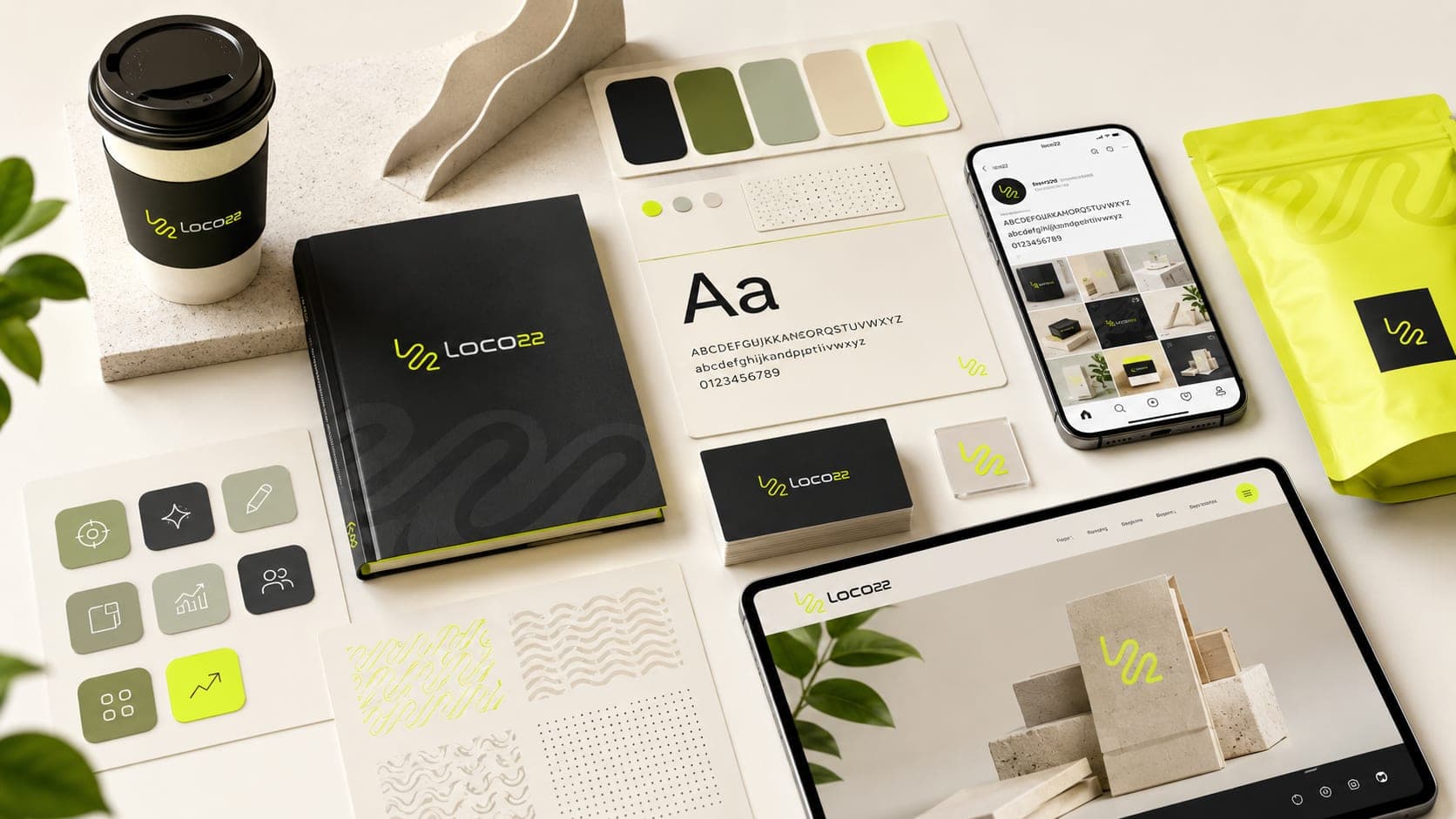
Professional branding covers four layers: brand strategy, a complete visual identity, voice and tone, and a style guide documenting how to use it all — the logo is just one piece of layer two. "I need a logo" is to branding what "I need a page" is to web design: the visible tip of a much bigger job.
A standalone logo — however good-looking — doesn't differentiate you, doesn't organize your communication, and doesn't survive the first hastily-made post. Here, piece by piece, is what a serious branding project should deliver, what it costs, how long it takes, and the warning signs so you don't pay twice for the same work.
Key takeaways
- Professional branding delivers four layers: positioning strategy, visual identity system, communication voice and tone, and a style guide documenting how to use it all.
- The logo must be delivered in every version (primary, compact, icon) and in editable files with rights transferred: if not, the brand isn't really yours.
- A style guide is the document that lets anyone — a new designer, a print shop, your community manager — produce consistent pieces without guessing.
- A complete identity for a small business costs between USD 1,000 and 5,000 depending on scope, and a typical branding project takes three to six weeks.
- Be wary of "logo in 48 hours with unlimited revisions": without a strategy stage, there's no branding — just a visual lottery.
1. Strategy: the invisible part holding everything up
Before drawing anything, you need to answer business questions: who's your customer, who are you competing against, why should they choose you, how do you want to be perceived. That's where positioning comes from — the idea your brand will occupy in people's heads. Skip this stage and the design is decoration: it might look nice, but it's a generic logo with your name on it.
In practice, strategy gets built through an in-depth brief and one or two working sessions. A serious studio will ask you uncomfortable questions: which customers you don't want to serve, what you promise that your competitors can't, what you want people to say about your company when you're not in the room. If nobody asked you any of this, what follows is drawing, not branding.
2. Visual identity: a system, not a doodle
Visual identity is the set of graphic elements that make your brand recognizable on any surface — from the website to the packaging. Here's what it needs to include:
- Logo in every version: primary, compact, and the icon that works as an avatar and favicon. If you're only handed one version, you're missing half of it.
- Color palette with a defined hierarchy: which colors dominate, which accent, and their exact codes for screen and print.
- Typography: which typeface for headlines, which for body text, and what alternative to use where fonts can't be installed (emails, presentations).
- Graphic resources: patterns, iconography, and photographic style. This is what makes a piece recognizable as yours even when the logo isn't in sight.
And a point nobody checks until it hurts: the files. Everything needs to be delivered in editable vector format, plus ready-to-use versions — PNG with a transparent background, variants for light and dark backgrounds — and rights transferred in writing. Without the source files, every future change ties you to the original provider for life.
3. Voice and tone: how your brand talks
The forgotten half of branding. Is your brand casual or formal? Technical or approachable? Does it joke around? Voice is what lets a message from your company be recognized without seeing the logo — and it's what stops your website from saying one thing, your Instagram another, and your quotes sounding like they come from a third company.
A simple example: the same delivery-delay notice can say "Dear customer, we regret to inform you that your order will be delayed" or "Shipping got messy on our end: your order lands Thursday. Sorry for the wait." Both are correct; they're different brands. The voice document defines which one is you, with examples of what to say and what not to, so anyone writing on behalf of the brand sounds the same.
4. The style guide: where it all becomes usable
A style guide is the document that explains how to use every element of the identity: minimum logo sizes, what not to do with it, allowed color combinations, typefaces, and applied examples. It's the deliverable that separates professional from amateur, and its job is concrete: letting anyone who touches your brand — a new designer, a print shop, your community manager — produce consistent pieces without having to guess.
A small business doesn't need a hundred-page tome: a clear 15-to-30-page PDF is enough, and, more importantly, actually gets used. The best guide is the one your team really consults — ask the studio to include the real cases from your operation: how the logo sits on an invoice, on an email signature, on a bag or on gift wrap.
5. Applications: the brand put to work
The system gets tested by applying it: business cards and email signatures, social templates, sales decks, stationery, or packaging depending on the industry. Agree on the scope in writing before starting — it's the difference between "they handed me a logo" and "they handed me a brand ready to use." Which applications to prioritize depends on your business:
- For an e-commerce store: packaging, labels, email templates, and the social graphics that carry daily sales.
- For professional services: sales decks, proposal templates, email signatures, and LinkedIn profile.
- For a physical location: signage, menu or price list, uniforms, and a Google Business profile with consistent photos.
- For everyone: the website. It's the most important application in the system — if the new brand lives alongside an old website, the effort only half shows.
How much does professional branding cost?
A complete identity for a small business — strategy, visual system, voice, and style guide — costs between USD 1,000 and 5,000 depending on scope: number of applications, depth of the strategy stage, and whether naming is included. A standalone logo can cost a lot less, but that's exactly what you're buying: a drawing with no system behind it.
For scale: it's a comparable order of magnitude to the website it's going to dress up (a professional company site runs USD 1,500 to 3,500). And unlike almost any other marketing expense, branding pays off over years: a well-built identity carries you a decade with minor tweaks.
How long does a branding project take?
A typical project takes three to six weeks: one or two for strategy and brief, two or three for design with feedback rounds, and one final week for the style guide and deliverables. What stretches the timeline the most isn't the design — it's committees. Decide up front who signs off — ideally one or two people — and the project flows.
Warning signs when getting a quote
- "Logo in 48 hours with unlimited revisions": no strategy, no questions about your business — that's a visual lottery, not branding.
- They don't ask you anything about your customer or your competitors: they're going to design for the owner's taste, not for the market.
- No editable files or rights transfer: the brand needs to be yours, source files included.
- No usage guide: even the nicest system degrades within six months if nobody documents how to use it.
- Price with no detailed scope: "complete branding" can mean anything. Demand the list of deliverables in writing before putting down a deposit.
The logo is the signature. The brand is everything people feel when they see it — and that doesn't get drawn in 48 hours.
Frequently asked questions
Can I start with just the logo and add the rest later?
You can, but it's best to have at least the strategy in place from day one: that's the part that keeps you from redesigning everything two years later. A sound staged approach is strategy plus core identity first (logo, palette, typography, basic guide), and applications later as needed. What doesn't work is a standalone logo with no definition behind it.
What files should I receive when a branding project wraps up?
Editable vector source files (AI or SVG) of every logo version, ready-to-use exports (PNG with transparent background, variants for light and dark backgrounds), exact color codes for screen and print, the typefaces or their license details, and the style guide as a PDF. All with rights transferred in writing.
Does branding include the website design?
Usually not: branding and web design are separate projects that are worth budgeting together. Branding defines the system — colors, typography, voice — and the website applies it. Doing both with the same team or in a coordinated sequence avoids the classic problem of a new brand living alongside a website that speaks a different visual language.
Do I need to register the trademark before doing the branding?
It's worth checking the name's availability before investing in identity: in Argentina trademarks are registered with the INPI and the process takes months, but the background search is quick. Designing a whole identity around a name that later turns out to be registered by someone else is one of the most expensive and most avoidable mistakes.
What's the difference between branding and visual identity?
Visual identity is a part of branding: the graphic elements (logo, colors, typography, resources). Branding is the full job: it also includes positioning strategy, communication voice and tone, and the style guide documenting it all. When a quote says "branding" but only lists graphic pieces, it's actually pricing visual identity.
How often should the style guide be updated?
A style guide gets updated when applications appear that it doesn't cover — a new channel, a new format, a new product — or when the identity evolves. In practice, a review every two or three years is enough to keep it current. An outdated guide nobody checks is as useless as not having one.
If your brand outgrew its identity, or you're about to launch and want to start off right, at loco22 we work with a method: brief, strategy, visual system, and style guide, with deliverables listed up front. Tell us what you do and who for in a free consultation, and we'll get back to you with a proposal — scope and price locked in.
Found this useful? Add us as a preferred source in Google.